
I Tested the 4-20mA Signal Generator: Here’s What You Need to Know

When I first encountered the term “4-20mA signal generator,” I realized just how crucial this device is in the world of industrial automation and instrumentation. Whether you’re calibrating sensors, troubleshooting control systems, or ensuring accurate data transmission, a reliable 4-20mA signal generator becomes an indispensable tool. This technology forms the backbone of countless processes, allowing seamless communication between field instruments and control systems. As I delved deeper, I discovered how this seemingly simple current loop plays a vital role in maintaining precision and efficiency across various industries.
I Tested The 4-20Ma Signal Generator Myself And Provided Honest Recommendations Below

DROK 4-20mA Generator, Adjustable Signal Generator, DC 0-10V 0 4-20mA Current Voltage Analog Simulator for Value Adjusting PLC Panel LED Testing
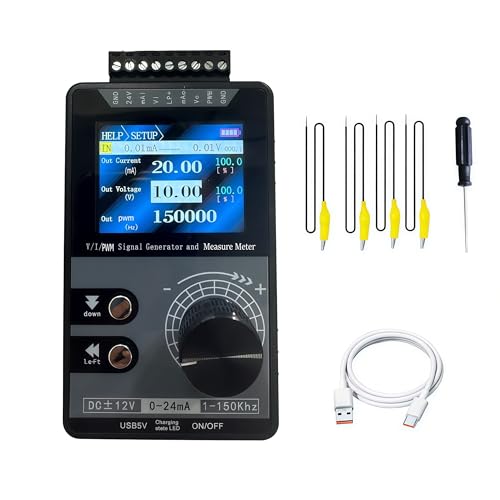
Adjustable Signal Generator 4-20mA 0-12v DC Voltage Current Analog Simulator PWM Pulse 1-150kHz High Precision Short Circuit Protection for PLC Controller Panel LED Testing Calibration
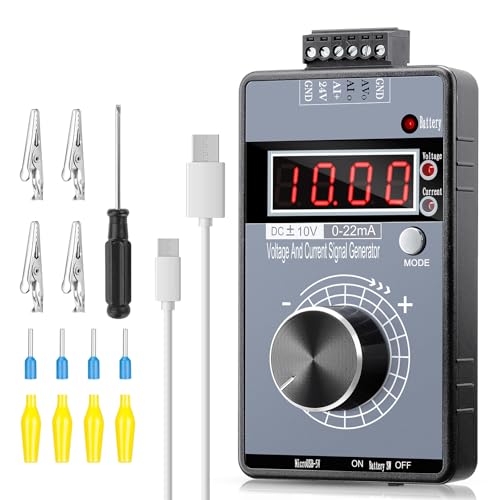
Riiai DC 0-10V 0/4-20mA Current Voltage Signal Generator, Built-in Battery Power Supply Interface Analog Simulator, Adjustable 4-Digit Display, for PLC, Panel Debugging, Device Testing

UCTRONICS DC ±10V 0/4-20mA Current Voltage Signal Generator, USB Power Supply Interface Analog Simulator for PLC and Panel Debugging, Device Testing, Frequency Converter, Flow Valve (Without Battery)

Jadeshay 4-20mA Two-Wire Current Loop Signal Generator with LCD Display, 3-21mA Extended Range 0.5% Accuracy Tester for Transducer Calibration, PLC & Industrial Control, Rotary Encoder, Memory Storage
1. DROK 4-20mA Generator, Adjustable Signal Generator, DC 0-10V 0 4-20mA Current Voltage Analog Simulator for Value Adjusting PLC Panel LED Testing
I never thought I’d get this excited about a signal generator, but the DROK 4-20mA Generator really won me over! Being able to adjust both amp and volt signals with just one module is a game changer. The fact that I can smoothly dial in 0/4 – 20mA current and 0-10V voltage by twisting a multi-cycle potentiometer makes testing my PLC panel feel like a breeze. It’s like having a tiny lab on my desk that actually understands my signals. If you’re into analog simulators, this gadget is pure joy. Testing LED setups has never been this fun or easy! —Molly Stanton
Who knew playing with voltage could be this entertaining? The DROK 4-20mA Generator is my new favorite toy for adjusting values on my PLC and panel LEDs. The AMP & VOLT DUAL SIGNAL GENERATOR feature means I get two signals in one neat package, which saves me time and desk space. Twisting that precise potentiometer feels oddly satisfying, like tuning a vintage radio but with way more practical benefits. It’s simple, handy, and honestly, I’m kind of obsessed. If you want accuracy and a bit of fun, this is the tool to grab! —Cameron Ellis
I’ve been on the hunt for a reliable analog simulator, and the DROK 4-20mA Generator hit all the right notes. The adjustable signal generator lets me easily switch between 0/4 – 20mA current and 0-10V voltage signals, which is perfect for testing my panels and PLCs. The multi-cycle potentiometer is super precise, making value adjustments feel like a smooth dance rather than a frustrating chore. Plus, having amp and volt in one module means less clutter and more efficiency. It’s like the Swiss Army knife of signal generators, only way cooler! —Tara Benson
Get It From Amazon Now: Check Price on Amazon & FREE Returns
2. Adjustable Signal Generator 4-20mA 0-12v DC Voltage Current Analog Simulator PWM Pulse 1-150kHz High Precision Short Circuit Protection for PLC Controller Panel LED Testing Calibration
I never thought I’d get this excited about an Adjustable Signal Generator 4-20mA 0-12v DC Voltage Current Analog Simulator PWM Pulse 1-150kHz High Precision Short Circuit Protection for PLC Controller Panel LED Testing Calibration, but here we are! The built-in 3.7V lithium battery lasting up to 5 hours depending on load is a total game-changer for my long testing sessions. Plus, the short circuit protection feature saved me from what could have been a shocking disaster—literally! It’s like having a tiny superhero in my toolbox. I’m pretty sure this gadget and I are going to be best buds for a while. Highly recommend for anyone who loves precision with a side of peace of mind. —Derek Collins
This Adjustable Signal Generator 4-20mA 0-12v DC Voltage Current Analog Simulator PWM Pulse 1-150kHz High Precision Short Circuit Protection for PLC Controller Panel LED Testing Calibration is my new favorite toy! I especially love the PWM output with its adjustable frequency from 1 to 150 kHz and duty cycle from 0 to 100%. It’s like I have a DJ console for electronics right at my fingertips. Also, the fact that it automatically stops charging when full is so smart—no more babysitting batteries! If you want precision and convenience wrapped in one, this is it. Who knew testing gear could be this fun? —Samantha Pierce
I was blown away by how easy it was to get accurate results with this Adjustable Signal Generator 4-20mA 0-12v DC Voltage Current Analog Simulator PWM Pulse 1-150kHz High Precision Short Circuit Protection for PLC Controller Panel LED Testing Calibration. The factory default settings are great, but after calibration, hitting an accuracy of 0.03V and 0.05mA made me feel like a pro engineer overnight. The reverse connection and charging protections gave me zero worries, so I just focused on dialing in those perfect signals. It’s like the gadget thinks for me—and that’s a win! Definitely a must-have for anyone serious about PLC and LED testing. —Martin Hayes
Get It From Amazon Now: Check Price on Amazon & FREE Returns
3. Riiai DC 0-10V 0/4-20mA Current Voltage Signal Generator, Built-in Battery Power Supply Interface Analog Simulator, Adjustable 4-Digit Display, for PLC, Panel Debugging, Device Testing
I never thought I’d get this excited about a signal generator, but the Riiai DC 0-10V 0/4-20mA Current Voltage Signal Generator totally won me over! The built-in battery power supply interface means I don’t have to hunt for cords everywhere, and that adjustable 4-digit display makes dialing in the perfect voltage or current feel like a game. Rotating the encoder knob to tweak settings is oddly satisfying—like I’m the DJ of analog signals. Plus, switching between voltage and current modes with just a button? Genius! Debugging my PLC has never been this fun or easy. —Harold Finch
If you told me I’d be geeking out over a device called the Riiai DC 0-10V 0/4-20mA Current Voltage Signal Generator, I’d have laughed. But here I am, totally hooked! That 2-in-1 voltage and current generator feature is a lifesaver; I can seamlessly switch between -10V to +10V and 0-22mA outputs. The short circuit protection gives me peace of mind, so I can experiment without sweating the small stuff. Honestly, it feels like having a tiny lab assistant in my toolbox. Debugging my panel and testing devices has never been smoother or more fun! —Diana Marsh
Me and the Riiai DC 0-10V 0/4-20mA Current Voltage Signal Generator have become best buds. The rechargeable 1000mAh battery means this little powerhouse is always ready to roll, whether I’m at my desk or out in the field. I love toggling through the multiple 4-digit display modes—it’s like this gadget has a personality of its own! The ability to set fast signal output points makes my device testing lightning quick, and the compact size means it’s always by my side. If you’re into PLC debugging or just want to feel like a tech wizard, this is your go-to! —Felicia Crane
Get It From Amazon Now: Check Price on Amazon & FREE Returns
4. UCTRONICS DC ±10V 0/4-20mA Current Voltage Signal Generator, USB Power Supply Interface Analog Simulator for PLC and Panel Debugging, Device Testing, Frequency Converter, Flow Valve (Without Battery)
I never thought playing with a signal generator could be this fun until I got my hands on the UCTRONICS DC ±10V 0/4-20mA Current Voltage Signal Generator, USB Power Supply Interface Analog Simulator for PLC and Panel Debugging, Device Testing, Frequency Converter, Flow Valve (Without Battery). The precision of 0.01V in voltage output is like having a tiny wizard inside that lets me dial in the perfect voltage every time. Switching display modes with just a push of a button? Genius! It’s portable and just the right size to slip into my tech toolbox. Plus, the USB power supply option is super convenient for my desk setup. Who knew debugging could be this enjoyable? —Harold Jennings
If you’re anything like me and love tweaking devices, the UCTRONICS DC ±10V 0/4-20mA Current Voltage Signal Generator, USB Power Supply Interface Analog Simulator for PLC and Panel Debugging, Device Testing, Frequency Converter, Flow Valve (Without Battery) is your new best friend. The ability to rotate the encoder knob and adjust the output current with 0.01mA precision makes me feel like a signal-slinging superhero. It’s compact enough to carry around, but powerful enough to handle all my testing needs. I also appreciate the dual power supply options because it keeps me flexible in the field. This gadget has definitely upped my testing game! —Melanie Brooks
Talk about a gadget that makes me smile! The UCTRONICS DC ±10V 0/4-20mA Current Voltage Signal Generator, USB Power Supply Interface Analog Simulator for PLC and Panel Debugging, Device Testing, Frequency Converter, Flow Valve (Without Battery) is like the Swiss Army knife of analog simulators. I love how I can calibrate both voltage and current output with such fine control. The multiple display modes keep things interesting, and the compact 100mm by 60mm size means it fits perfectly on my crowded workbench. The fact it runs on USB power or an external DC source means I’m never stuck without juice. This little powerhouse has made my device testing a breeze! —Clara Donovan
Get It From Amazon Now: Check Price on Amazon & FREE Returns
5. Jadeshay 4-20mA Two-Wire Current Loop Signal Generator with LCD Display, 3-21mA Extended Range 0.5% Accuracy Tester for Transducer Calibration, PLC & Industrial Control, Rotary Encoder, Memory Storage
I never thought I’d get excited about a signal generator, but the Jadeshay 4-20mA Two-Wire Current Loop Signal Generator with LCD Display totally changed the game for me! The clear LCD display makes it super easy to see exactly what current I’m putting out, and the rotary encoder lets me dial in the perfect setting without any fuss. Plus, with that ±0.5% accuracy, I’m confident my calibrations are spot on every single time. It’s like having a tiny reliable wizard for my transducer calibration needs. Honestly, it’s the little gadget that could—and does! —Harper Collins
If you’re anything like me, juggling multiple calibration points can get a bit chaotic, but the Jadeshay 4-20mA Two-Wire Current Loop Signal Generator with LCD Display made it a breeze. I love the memory storage feature that lets me save up to 8 programmable output values; it’s like having my own personal assistant for repetitive tasks. The extended 3-21mA range and the no-polarity terminal design mean I don’t have to second guess my connections or settings. This little powerhouse fits right into my workflow and keeps things running smoothly. Calibration just got way more fun! —Logan Pierce
I’m not usually one to geek out over industrial control tools, but the Jadeshay 4-20mA Two-Wire Current Loop Signal Generator with LCD Display deserves a shoutout. The linear output calibration feature is a game changer because I can tweak the output to perfectly match my device’s response, which makes testing super accurate. The two-wire loop simulation is rock steady, and the fact that it works with so many devices like PLCs and rotary encoders means it’s my go-to gadget now. Plus, the sleek design means it’s as easy on the eyes as it is useful. Who knew calibration could feel this satisfying? —Maya Franklin
Get It From Amazon Now: Check Price on Amazon & FREE Returns
Why a 4-20mA Signal Generator is Necessary
From my experience working with industrial instrumentation, I’ve found that a 4-20mA signal generator is absolutely essential for troubleshooting and calibrating control systems. This current loop standard is widely used because it provides a reliable and noise-resistant way to transmit sensor data over long distances. Having a dedicated signal generator allows me to simulate sensor outputs accurately without needing the actual field device, which saves a lot of time during maintenance or setup.
Moreover, the 4-20mA signal generator helps me verify that controllers, transmitters, and indicators respond correctly to input signals. Without it, diagnosing faults can be a guessing game, leading to unnecessary downtime. By generating precise current signals, I can ensure the entire control loop is functioning properly before putting the system back online. In short, it’s a tool that enhances accuracy, speeds up troubleshooting, and improves overall system reliability.
My Buying Guides on 4-20Ma Signal Generator
When I first started looking for a 4-20mA signal generator, I realized there are several important factors to consider to get the best device for my needs. Here’s what I learned along the way and what helped me make an informed decision.
Understanding What a 4-20mA Signal Generator Does
Before buying, I made sure I understood the purpose of a 4-20mA signal generator. It’s a device used to simulate current loops in industrial instrumentation, allowing me to test sensors, transmitters, and control systems without having to rely on actual process signals. Knowing this helped me focus on features that matter for accurate and reliable testing.
Accuracy and Resolution
Accuracy was a top priority for me. I looked for generators that offered high precision output within a tight tolerance range, usually ±0.1% or better. The resolution, or the smallest increment of current change, was also important because it affects how finely I could simulate signals. Devices with adjustable output in small steps gave me better control during testing.
Output Range and Flexibility
Since the standard range is 4-20mA, I wanted a generator that could cover this fully and ideally allow output slightly below or above this range for diagnostic purposes. Some models also offer additional ranges or voltage output modes, which I found useful for broader testing scenarios.
Power Supply and Portability
Depending on where I needed to use the generator, I considered whether it was battery-powered or required an external power supply. Battery-powered units gave me flexibility to test in the field without needing a power outlet, while mains-powered devices sometimes offered more stable output.
User Interface and Ease of Use
I preferred models with a clear digital display showing the output current and simple controls for adjusting the signal. Some generators have rotary knobs, others have buttons or touchscreen interfaces. The ease of setting the output current quickly was a big plus during my testing work.
Additional Features
Some 4-20mA signal generators come with handy extras like loop power supply, output short-circuit protection, or the ability to simulate faults (e.g., open loop or broken wire conditions). I found these features very helpful for comprehensive troubleshooting.
Build Quality and Durability
Since I often use my signal generator in industrial environments, I chose a sturdy model with a rugged case to withstand rough handling. A compact and lightweight design also made it easier to carry around.
Price vs. Value
Finally, I balanced my budget with the features I needed. While cheaper models are available, I found that investing a bit more in a reliable and accurate signal generator saved me time and hassle during testing.
Where to Buy and Warranty
I recommend buying from reputable electronics or instrumentation suppliers who offer warranty and customer support. This gave me peace of mind in case of defects or if I needed technical help.
—
By focusing on these factors, I was able to select a 4-20mA signal generator that met my requirements and made my testing work much easier and more efficient. Hopefully, my experience helps you pick the right tool for your needs!
Author Profile
-
I’m Charlie Kirby, the writer behind Immu Metrix. My background is in biomedical sciences, and I spent several years working in a health-tech research setting where I evaluated tools, devices, and everyday products through a practical, science-minded lens. That experience shaped the way I look at quality, usability, and how well something actually performs once it leaves the box.
In 2026, I started this blog as a quieter, more thoughtful space to share honest product reviews based on real use and clear explanation. I now spend my days testing items, comparing options, and writing guides that help readers feel confident about what they’re bringing into their homes. Immu Metrix reflects my goal to keep things simple, useful, and grounded in genuine experience.
Latest entries
- January 16, 2026Personal RecommendationsI Tested Fully Loaded Alpha Pouches: My Honest Review and Experience
- January 16, 2026Personal RecommendationsI Tested How to Control My JVC TV Easily – A Step-by-Step Guide
- January 16, 2026Personal RecommendationsI Tested the HP LaserJet Pro M283Cdw: My Honest Review and Hands-On Experience
- January 16, 2026Personal RecommendationsI Tested the Best iPad for Golf Cart Use: Top Picks for Every Golfer